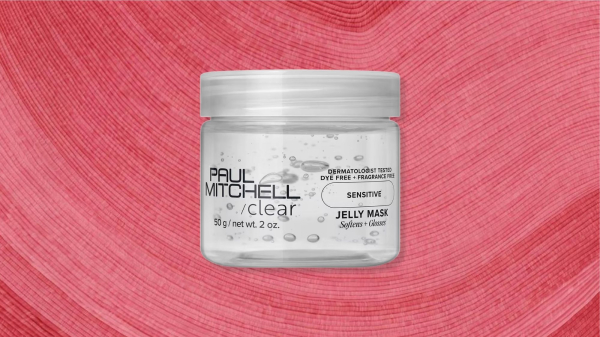
The Paul Mitchell Clear Jelly Mask Is a Jack of All (Hair Mask) Trades—Review
 Save this storySave this story
TL;DR:
- What it is: A multitasking hair mask
- What it does: Adds hydration and gleam to hair
- Who it’s for: Anyone looking for an in-shower treatment to tame frizz and add moisture back into hair
Ya’ll know I’m a lazy beauty director. I wash my hair once a week (oops), and style it even less (double oops). But for someone who prefers to do the bare minimum for my strands, I always make sure I give them an extra bit of moisture whenever I can.
The easiest way? A hair mask. I like the Paul Mitchell Clear Jelly Mask because it’s one of those multitasking treatments that offers a plethora of benefits. The fragrance-free, translucent, jelly-like treatment adds hydration and gleam to my hair without any fuss or heavy lifting. I like to use it during my weekly Everything Shower, but it can be used whenever you shampoo your hair.
Here’s what I do: After shampooing, I rake in the gelatinous goop with my fingers, then leave it on (mids to ends) for 5 to 15 minutes. If my blonde highlights are looking and feeling a little dry, I’ll try to leave the mask on for the full 15 minutes.
Once the time is up, I’ll rinse and follow it up with my favorite conditioner. Easy peasy!
The Paul Mitchell Clear Jelly Mask is in the June Allure Beauty Box.
Paul Mitchell Clear Jelly Mask
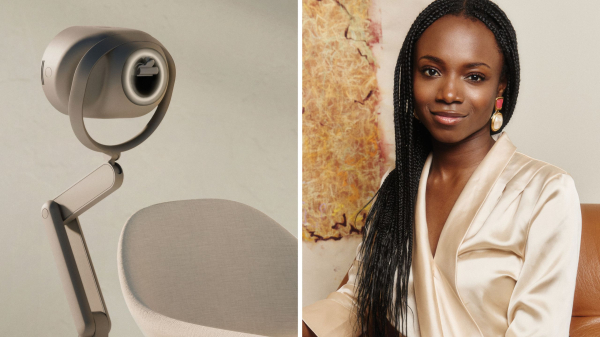
A Hair-Braiding Robot Is Coming to Salons This Fall
 Courtesy of brandSave this storySave this story
It takes most people years to land on a signature look. Yinka Ogunbiyi solidified box braids as hers when she was just five years old. That’s pretty early to settle on a beauty uniform, yes, but as a young Black girl—and a Nigerian at that—getting braids felt like a natural part of life. Ogunbiyi enjoyed her regular visits to the salon: She’d settle into the braider’s chair with some snacks and a good show to make the time pass quickly.
But the 2020 lockdown forced Ogunbiyi (then an engineering student at Harvard) to attempt doing her own braids. No longer a passive participant in her styling sessions, she realized that the process is “really hard and mechanically repetitive,” she says. “It took me four days to do small, waist-length, knotless box braids.”
By the second day of braiding, a light bulb went off in her engineer's brain. Reflecting on how long the process was taking, she wondered, Where's the machine to make this faster? Ogunbiyi saw similarities between the process of braiding and sewing—a meticulous and repetitive action that could be automated—and began to envision a solution. This experience led to the invention of HaloBraid: a device that assists stylists by finishing the braids they’ve started.
Excitement about the device spread online after a clip of Ogunbiyi winning the Harvard Pitch Competition went viral in 2025. The win secured Ogunbiyi’s brand, Halo, $75,000 in funding, and its inaugural product, HaloBraid, will be launching in September 2026.
 Courtesy of Brand
The “braiding robot,” as the internet has dubbed it, is more accurately described as a braider’s assistant that’s attached to the salon chair. “Each braid is started by hand,” says Ogunbiyi. “The stylist does just a small portion of the braid, then they transfer [the braid] to the HaloBraid device.” How much of the braid makes up that “small portion” varies, but the stylist needs to at least finish adding in all the braiding hair, since the robot can't feed in extensions.
Because there is so much variation in styles, the brand isn't making any time-specific claims about how fast the robot works. However, Ogunbiyi says, “HaloBraid can complete each braid up to five times faster than a stylist.” Ogunbiyi gives one example: With traditional box braid styles that can take six to eight hours, a stylist working with HaloBraid could theoretically bring that down to about two and a half to three hours.
“HaloBraid can complete each braid up to five times faster than a stylist.”
The device is limited in what it can do, though. If you’re a fan of intricate cornrow styles, the HaloBraid can’t help you there since it can’t braid close to the scalp. The robot can only handle mid-lengths to the ends of the hair, plaiting a classic three-strand braid. “It's not as complex as a human hand, and it can't do everything a human hand can,” says Ogunbiyi. She adds that the team is already brainstorming ways to enhance the device to support more advanced styles.
The journey to developing the final version of HaloBraid took over three years and 600 prototypes—a process that began by examining toys that braid dolls’ hair and machines that create three-strand cords. “We've looked at every pattern on a braiding machine and looked at the different problems there to solve,” says Ogunbiyi. For example, the team needed to figure out “how to get hair into this device as quickly as possible and easily for the user.” Most of the toy braiders use a little crochet hook to feed in the hair, but on humans, this method could cause painful pulling and yanking of the hair. Ogunbiyi says she figured out how to create an automated device that can finish a braid with little to no tension—no matter the hair type.
According to Ogunbiyi, Halo has a broader mission of “creating technology for textured hair and improving the process of getting your hair styled for people with all textures.” HaloBraid is the brand’s first attempt to achieve this goal.
The reduction in appointment times will, in theory, also reduce strain on stylists' hands. This will allow them to take on more clients, if they want, and increase their earning potential, or work fewer hours with about the same take-home pay, creating more time for themselves. These prospective benefits are what drew entrepreneur Alexis Ohanian to invest in the brand and raise $7 million for the company and the device. “I immediately saw the value for HaloBraid,” says Ohanian. “I've sat through and tried to help during these marathon braiding sessions for my daughter and wife.” Ohanian adds that at a time when there are such rapid advancements in robotics and AI, “It's shocking someone hasn't built this business yet.” “There was clearly a massive gap in the market, so [the decision to invest] was a combination of founder, product, and market fit,” Ohanian says.
This is a pro-exclusive device, and there are already stylists on a wait list who will be able to receive a HaloBraid at no cost. “Customers can book through us [on the Halo website] or through their stylist directly and then have their HaloBraid appointment,” says Ogunbiyi. Though the device is free, Halo will receive a percentage of what the stylist makes per appointment. The brand isn’t sharing the exact percentage of profit it will take from stylists, but Ogunbiyi maintains that the goal is to “make HaloBraid as accessible as possible for stylists and clients.”
While an automated braiding device sounds like it would make both stylists’ and customers’ lives easier, there’s the now-familiar wariness around any implication that a robot could do all or part of a human’s job just as well. After all, many people have close relationships with their stylists and braiders that go beyond hair care. “Will the robot chat and spill the tea?” wrote one commenter under Harvard Innovation Lab’s Instagram post highlighting Ogunbiyi’s winning pitch.
“Will the robot chat and spill the tea?”
The founder says she’s thoroughly considered this and wants to reassure the public that the machine can’t replace braiders: “We've really built this to serve stylists,” says Ogunbiyi, who adds that the HaloBraid team consulted with a group of pros to learn the biggest issues they face in their work. “Many stylists mentioned dealing with carpal tunnel and early onset arthritis,” Ogunbiyi says. The HaloBraid is meant to be only an assistant.
The device can’t part hair, map out artistic cornrows, or, of course, act as a friend and therapist. Its role is purely mechanical, doing the repetitive work of creating a three-strand braid. “Every time we've brought a stylist in to test, we've learned something new that's radically changed the device,” says Ogunbiyi. Stylists' insights influenced the basic design of the HaloBraid, which initially was handheld, but transitioned to being mounted on a chair after the stylists said that holding the device would obstruct their process.
The HaloBraid is one of those “you’ve got to see it to believe it” kind of things. And come September 2026, when it will roll out in salons, customers will be able to witness the device in action. “We have 6,000 stylists signed up to receive the HaloBraid, and there are 5,000 stylists and salons on the wait list,” says Ogunbiyi, who adds that these stylists are spread between major cities, including Los Angeles, Chicago, and New York.
“I’m excited about what we're building,” Ogunbiyi says. “We believe that enhancing life experiences, like braiding, has real meaning.”
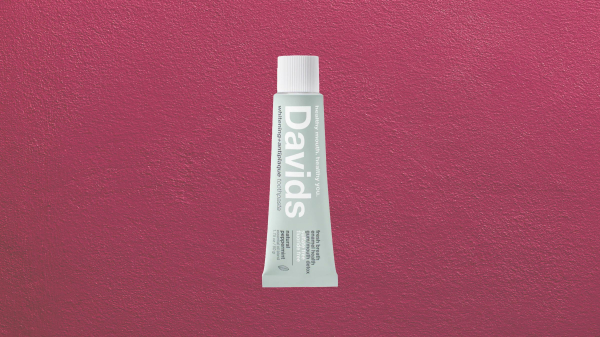
The Davids Hydroxi Whitening + Enamel Health Peppermint Toothpaste Proves Brushing Your Teeth Can Be Chic—Review
 Save this storySave this story
TL;DR:
- What it is: A whitening toothpaste
- What it does: Cleanses gums and teeth with a sweet peppermint flavor
- Who it’s for: Anyone looking for an elevated take on an everyday, mundane task
Who says oral care can't also be chic care? Davids Hydroxi Whitening + Enamel Health Peppermint Toothpaste is proof.
As someone who spends approximately 30 minutes (minimum) on her teeth every day, I would know chic oral care when I see it—and I’m seeing it.
Inside the mint green tube (love that shade, BTW!) is filled with SLS-free peppermint paste that makes the twice-daily chore of brushing my teeth look and feel a little more elevated.
Here’s how I use it: After flossing, I twist off the tube’s cap and squeeze a pea-size dollop onto my electric toothbrush, then I start brushing! I brush for about two minutes (the recommended time for this task, according to the American Dental Association).
Once I’m done brushing, I follow up the cleanse with a quick swish and a swirl of my favorite mouthwash.
The Davids Hydroxi Whitening + Enamel Health Peppermint Toothpaste is in the June Allure Beauty Box.
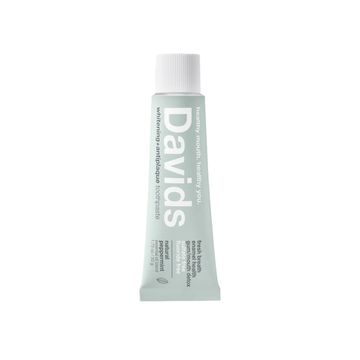
Davids Hydroxi Whitening + Enamel Health Peppermint Toothpaste
I Got a Revision Rhinoplasty to Fix My Nose Job—Before & After Photos
 Courtesy Victoria OlivaSave this storySave this story
Many people celebrate their college graduation with a party, a family trip, or a special keepsake—maybe an investment bag or a piece of jewelry. I got a rhinoplasty.
Some context: I'd always liked my facial features, but as I got older, a bump on the bridge of my nose became more and more prominent. As it grew more apparent, I grew increasingly insecure about it, to the point that it consumed me. I hate to admit it, but I'd spend an ungodly amount of time in front of the mirror: fixating on the hump on my nose and experimenting with makeup techniques that would soften its appearance. In photos, I'd smile with a closed mouth, because a smile too wide would only accentuate the “imperfection.” I'd compare my nose to my sisters' perfect, pert, straight ones, wondering how I ended up with this asymmetrical appendage.

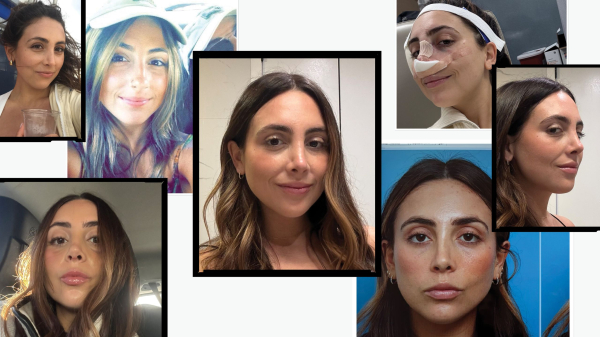
L: The writer at 21, before her first rhinoplasty. R: One year after her first rhinoplasty.
Courtesy Victoria Oliva
So with the ink on my diploma just barely dry, I went into the OR for a rhinoplasty, performed by a plastic surgeon in my home state of New Jersey who came recommended by a family friend. After reducing the bump on the bridge of my nose and refining the tip, I was happy with the results and my confidence definitely improved—for a time.
Why I Started Considering a Second Surgery
Fast forward a decade later, and my rhinoplasty was not aging well. Although my bridge remained smoother, I was left with one side of my nose collapsed, a droopy tip, and even breathing difficulties—my nasal passages always felt kind of clogged. With each year that passed, I felt like my nose was becoming more crooked.
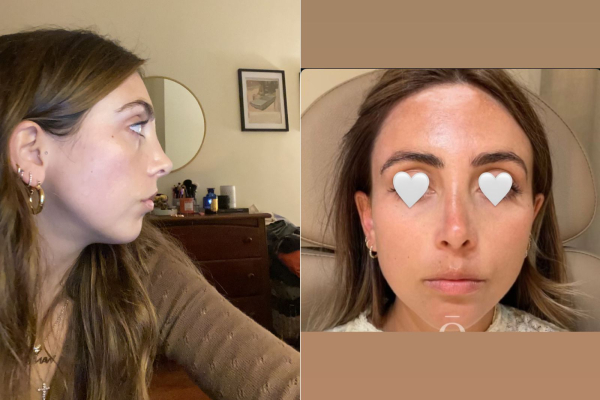
L: Two years after her primary rhinoplasty. R: Nine years after.
Courtesy Victoria Oliva
This kind of gradual change is more common than most people realize. The surgeon who ultimately did my revision, Thomas Romo III, MD, a double board-certified facial plastic surgeon and director of facial plastic and reconstructive surgery at both Lenox Hill Hospital and Manhattan Eye, Ear & Throat Hospital in New York City, explains that healing after rhinoplasty is highly variable. While the nose is generally considered healed around the one-year mark, that timeline can stretch to 18 months or longer depending on the person.
Rhinoplasty is one of the most technically demanding procedures in plastic surgery. As Allure contributor Joan Kron wrote 20 years ago in a story about rhinoplasties: “The surgeon must mold skin, cartilage, and bone into a suitable shape strong enough to allow a 50-mile-per-hour flow of air.” (Achoo!) And revision cases take the challenge up several notches. Each surgery disrupts blood supply to the skin and lays down a new layer of scar tissue, meaning the risks compound with every procedure. Unlike procedures on the body where tissue is more forgiving, incisions are more accessible, and the architecture is less intricate, the nose is a complex, multilayered structure of skin, cartilage, and bone packed into a very small space. Every millimeter matters. And because this particular body part sits at the center of the face, even subtle irregularities are visible.
Although I hated the thought of putting my body through another surgery (and facing the emotional and physical challenges that come with it), I knew I wanted to explore a second rhinoplasty. Not only for aesthetic reasons—which admittedly held a lot of weight in my decision—but because it was becoming more and more challenging to breathe freely. I was concerned about the condition worsening, so I started looking into surgeons.
Finding a Revision Rhinoplasty Surgeon
One of the perks of living in New York City is having access to an overwhelming number of world-class plastic surgeons. I met with at least 10 of them for consults. I went into the process knowing it wasn't a pick-the-biggest-name-and-hope-for-the-best situation. I didn’t need someone who just does great nose jobs, I needed someone who excels at revisions. "When I approach a revision rhinoplasty, I'm not starting with a blank canvas,” Sam Rizk, MD, a double board-certified facial plastic surgeon based in New York City, says. “I'm working with a nose that has already been surgically altered."
Unlike a primary procedure, where the anatomy is intact and predictable, revision surgery requires a careful analysis of what remains: the condition of the septum, the strength of the nasal valves, the thickness of the skin, and how the nose has healed from prior surgery. Scar tissue, compromised support structures, and over-resected cartilage are all common findings. "The goal is not just to refine the appearance," Dr. Rizk explains, "but to restore structural integrity and function first." That's why finding a surgeon with deep experience in revisions specifically, not just rhinoplasty broadly, matters so much—the calculus isn't just about what's aesthetically possible, it's about what's safe. On top of the usual risks that come with surgery, a botched revision can mean permanent scarring, loss of nasal support, worsened breathing, or a result that's structurally too compromised to correct again.
Unlike a primary procedure, where the anatomy is intact and predictable, revision surgery requires a careful analysis of what remains.
While the other surgeons I spoke with were reputable and talented, when I met Dr. Romo I knew immediately that he was the right choice for me. He was direct and transparent, but never pushy. He didn't try to impose his aesthetic or talk me into a version of my face that wasn't mine. It felt collaborative, like he was listening to what I wanted and then calmly explaining what was realistic, what was unnecessary, and what would keep things structurally sound long-term.
Over the month-long for a surgeon, I didn't let social media hype sway me—someone can have a huge TikTok following, but that doesn't tell you about their actual surgical outcomes or experience with complex revisions. Before-and-afters, on the other hand, can tell you a lot. Ask every surgeon you consult for a portfolio of revision cases specifically—not just primary rhinoplasties—and look critically at what you're seeing. Lighting, angles, and timing can all be manipulated to make results appear more dramatic than they are. (Read Allure’s full guide to spotting misleading post-op photos.)
Revision Rhinoplasty, Explained
Revision rhinoplasties are much more common than most patients realize going into their first surgery. Both Dr. Romo and Dr. Rizk specialize in the procedure, so they do more revisions than the average surgeon, but Dr. Rizk estimates that 10 to 20 percent of patients who undergo a primary rhinoplasty will eventually consider a secondary procedure. On timing, both surgeons are aligned: waiting at least a full year after the initial procedure is critical. The nose needs time to heal completely, and only once swelling has fully resolved can a surgeon properly assess what needs to be addressed.
In our consultation, Dr. Romo explained that for decades, rhinoplasty was largely about subtraction, or making the nose smaller by removing structure. The problem, he noted, is that taking too much away can compromise breathing and leave the nose to heal unpredictably, resulting in deformities, twisted profiles, and that telltale over-scooped look. The field has since course corrected. “Structured rhinoplasty” is the current standard among plastic surgeons, and it focuses on building and reinforcing the nose's internal framework, using grafts to create lasting support.
For those who already underwent a subtraction-focused procedure, restoring that lost structure is exactly as involved as it sounds. "In revision cases, rebuilding the structure usually means that too much cartilage was removed during a prior surgery, or that the nose's foundational support has been weakened," Dr. Rizk explains. "This can create both aesthetic concerns [like drooping, a collapsed tip, and asymmetry] and functional problems, including difficulty breathing." Reconstruction means restoring that internal framework with cartilage grafts. In his practice, the most common material he uses is rib cartilage from a tissue bank, which is particularly effective for more extensive structural work. "These grafts serve as the nose's internal scaffolding," he says. "They allow me to rebuild the bridge, support the tip, and improve airflow, while also creating a result that looks natural." In my case, Dr. Romo used cartilage from my ear (more on that in a bit), placing small, precisely measured grafts to rebuild the collapsed areas and restore both structure and symmetry.
Needing a revision doesn’t necessarily mean the surgeon for your primary did a bad job. Dr. Romo says that it’s usually a combination of factors that leave a patient unsatisfied with their rhinoplasty in the long run. Skin texture, for example, plays a big role: Patients with thinner skin—whether due to genetics, age, or the cumulative effects of sun damage and collagen loss—are more likely to see asymmetries emerge over time, since their skin can reveal every contour underneath. But in most of the revision cases he sees (including mine) the primary culprit is technical: If too much architecture has been removed, it leaves the underlying structure too weak to hold its shape as the skin heals and contracts around it. "The skin is not benign," he explains. "When it heals down to the architecture, it has a tensile force [the skin's natural pulling/contracting force as it heals and adheres to the underlying structure] and if the architecture underneath is weak, it'll deform, leaving a dent, a bump, or an asymmetry."
For a revision to be successful, the approach has to be both precise and selective. Dr. Rizk is straightforward about this: Every subsequent surgery is more complex than the last; scar tissue builds up, the underlying structure may already be weakened, and there's less margin for error. But when the focus is on rebuilding from the inside out rather than just refining the outside, most patients don't need to go back for another procedure. He's also selective about who he operates on, turning away roughly 20 percent of prospective patients and only moving forward when he's confident that a real, lasting improvement is possible. If scar tissue is too severe, if prior surgeries have left the blood supply compromised, or if a patient's goals aren't achievable without unacceptable risk, proceeding could cause irreversible damage. That kind of judgment, he says, is what makes the difference long-term.
The Cost of Revision Rhinoplasty
According to the American Society of Plastic Surgeons, the average cost of a primary rhinoplasty in the U.S. is $7,637, though that figure can vary greatly depending on your geographic location and provider. Second rhinoplasties are typically much more expensive—and the more complex the case, the higher the cost.
In New York City, Dr. Romo estimates the range for a revision runs roughly $20,000 to $50,000, though highly complex reconstructions can cost significantly more. For context, my own procedure came to $24,600 total — $20,000 for the surgeon's fee, $2,400 for the facility, and $2,200 for anesthesia. It's also worth budgeting for consultations: I'd recommend speaking with several surgeons before committing (though 10 might have been overkill!), and each appointment can cost anywhere from $500 to $2,000, though the surgeon you ultimately proceed with will typically apply that fee toward your final bill.
The reason is straightforward: revision cases simply take longer. Where a primary rhinoplasty might take under an hour, a complicated revision can run five, six, even seven hours in the operating room—and that time, expertise, and precision are reflected in the cost. You also have to consider anesthesia and surgical facility fees, which are typically billed separately from the surgeon's fee. Anesthesia alone can range from around $1,500 to $3,500 for general, and facility fees vary depending on whether the surgery is performed at a hospital or a private surgical center, with hospital fees typically running higher. Most reputable surgeons will provide an all-in quote after a consultation so there are no surprises.
My Revision Rhinoplasty Game Plan
Dr. Romo says that he looks at the nose like an arch. In the case of my particular arch, "Your upper width has collapsed and it affects all three thirds of your nose: upper, middle and lower,” he told me. “Those areas need to be augmented." To do that, he would rebuild with small pieces of cartilage from my own body placed strategically to restore the structure of my nose, not only immediately but long-term. The surgery would involve very precise work, measured in millimeters. The goal was to keep my nose small and slightly upturned, but better balanced and more refined. What gave me confidence was his measured approach: He was intentionally keeping the plan conservative since I liked my nose shape overall. We would just be improving specific issues rather than doing a huge reconstruction.

One week after the primary rhinoplasty. The bruising was much worse with this procedure than the revision.
Courtesy Victoria Oliva
In my case, Dr. Romo assured me the downtime wouldn't be dramatically different from a primary rhinoplasty—which is the case for most revision rhinoplasty patients. The critical window is the first two weeks. You might be most focused on how you look—swollen, bruised, potentially sporting two black eyes. But what’s really important during this time period is avoiding anything that could cause bleeding or raise your blood pressure (downward-facing dog, heavy lifting). Once you're past that point, the risk profile drops significantly and most people can return to regular life. After that, taping becomes the main focus in an effort to control how the skin contracts onto the new underlying structure (more on that in a moment).
Dr. Romo tells patients that the post-surgery milestones are at two weeks, six weeks, three months, six months, nine months, and one year. That doesn't mean you won't look great well before the year mark—most people do—but full settling of the structure, sensation, and any residual swelling follows its own timeline that can't be rushed. The one-year point is when results are considered truly mature.
The Revision Rhinoplasty Procedure
Everyone's surgery will look different depending on what needs to be revised. For me, the operation itself took about three hours. I was under general anesthesia, so I had to take some precautions beforehand like stopping certain medications and supplements a couple of weeks prior, and not eating or drinking after midnight the day before the procedure. Once I was asleep, Dr. Romo harvested cartilage from one ear, making an incision in the crevice behind the ear and taking cartilage from the antihelix and concha, to use as grafts, then meticulously rebuilt the collapsed areas of my nose to reinforce the upper, middle, and lower thirds to create a stable, balanced structure.
When I woke up, I was surprisingly comfortable. Yes, there was a splint on my nose and a small bandage on my ear, but the pain was minimal as I was still medicated—more pressure than anything sharp. The first thing I noticed was that I could breathe. Even with all the swelling and packing, my nose felt clearer than it had in years.
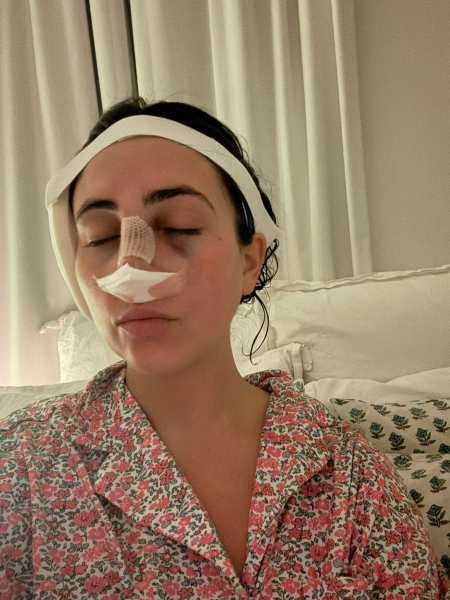
One day after the revision, wearing an ear protector, nose splint, and gauze to catch any blood.
Courtesy Victoria Oliva
My recovery wasn't too bad: I'd give it a six out of 10 on the misery scale. At night I'd take one of the pain pills Dr. Romo prescribed to help me sleep, but other than that the pain was totally manageable with over-the-counter ibuprofen. The splint came off around day five, which was both exciting and nerve-wracking. By day seven, I looked presentable enough for a video call if needed. Since Dr. Romo had used ear cartilage, I wore an ear protector—essentially a padded cup attached to a headband that went around my head to shield the ear from any pressure during the night for two weeks while sleeping.

1.5 weeks after the revision, with just color corrector to cover the writer’s black eyes.
Courtesy Victoria Oliva
The post-op care instructions were surprisingly manageable too. I could shower and wash my hair the same day, but had to avoid bending at the waist to prevent bleeding (I squatted instead), and sleep elevated on two to three pillows to control swelling. Easy enough. But then there was the taping. "Taping is critical," Dr. Romo had told me. "This is about controlling how the skin shrinks down to the new architecture." The process is exactly what it sounds like: applying surgical tape across the nose to gently compress the skin and guide it as it heals, preventing excess swelling from distorting the new structure underneath. He recommends taping as consistently as possible, ideally during the day, but at minimum overnight if daytime isn't feasible. I taped for about three months—well past the one month Dr. Romo said I could stop—because I noticed my nose looked noticeably less swollen in the mornings after taping the night before. Honestly, I still tape occasionally before a big event , and am very happy with how my nose healed. I also used my TheraFace Mask Glo (a red light therapy mask I’d already been using consistently for about a year and found kept puffiness down) in hopes of reducing inflammation in my nose, and made sure to get plenty of rest.
“Recovery after revision rhinoplasty generally requires a bit more patience than the initial procedure,” says Dr. Rizk. In the early stages, the experience is similar: Patients can expect bruising and swelling for the first one to two weeks, after which they are usually comfortable resuming social activities. “However, because the nose has already undergone surgery, [complete] healing can be slower,” Dr. Rizk says. “Swelling, particularly in the nasal tip, can persist for a longer period due to scar tissue and changes in the tissue planes.”
At my one-week follow-up appointment, Dr. Romo removed the splint and examined my nose carefully, confirming the structure was exactly where we wanted it to be. I knew I still had months of swelling ahead, but the foundation was solid—and that gave me a ton of relief.
The Reality of Revision Rhinoplasty
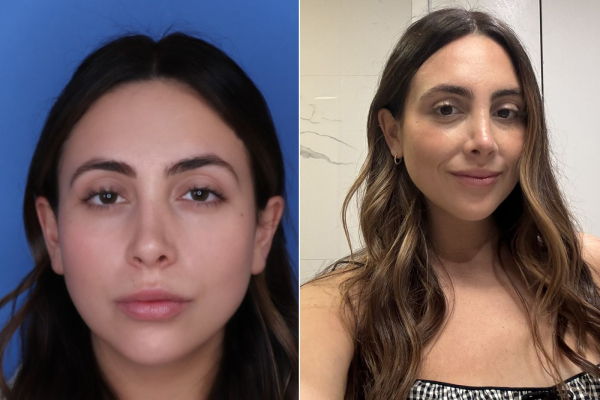
Before (L) and 2.5 months after the revision.
Courtesy Victoria Oliva
While rhinoplasty is a widely discussed topic—especially on social media and reality TV—revision rhinoplasty is rarely talked about, despite being incredibly common. It's one of the hardest surgeries to get perfectly right, and the emotional toll of going through it a second time is so real. That’s why one of the first things I asked Dr. Romo: Could this happen again? His answer was reassuring but honest. The need for further revision after a revision is rare. In Dr. Romo’s practice, the rate of revisiting rhinoplasty for the third time is under 2%, well below the field-wide estimate of 10 to 15%. What made this experience different from my first surgery wasn't just the surgeon, but the approach: structural rhinoplasty focused on rebuilding rather than reducing, a conservative plan tailored to what I actually wanted and a year-long process of monitoring and follow-up rather than a single appointment and a send-off. There are no guarantees in surgery, and healing will always have some variability. But going in informed, with the right surgeon and the right plan, changes the odds considerably.
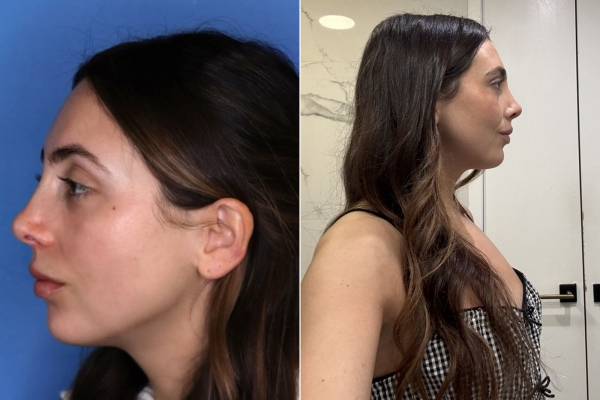
Before (L) and 2.5 months after the revision.
Courtesy Victoria Oliva
For me, this revision wasn't just about fixing what went wrong aesthetically. It was about being able to breathe properly again, about trusting my instincts when choosing a surgeon, and about giving myself permission to prioritize function and form. The decision to undergo a second surgery felt heavier than the first: There was more at stake, more anxiety, and more shame that I had to "fix a fix." But I know now that seeking a revision isn't a failure. It's taking back some control.
Six Months After My Revision Rhinoplasty
I'm now six months post-op, and while I'm still in the healing process, I can see and feel a big difference. My breathing has improved dramatically, and my nose’s asymmetry has been corrected. It finally looks like a refined version of what I'd hoped for the first time around. Most importantly, I feel like myself again: not the version of me obsessing in the mirror, but the version who can look at her reflection and simply move on with her day.
The journey taught me that cosmetic surgery isn't always a one-and-done experience—and that's okay. Getting it right takes patience, research, and a surgeon who truly listens. And sometimes, yes, a second surgery. If you're considering a revision rhinoplasty, my advice is this: Take your time finding the right surgeon, ask every question (even the ones that feel silly), trust your gut, and remember that healing is a journey measured in months, not days. The nose you want—and the confidence that comes with it—is so worth the wait.
A Trip Inside the World’s Largest Collection of Jumbo Perfume Bottles
 Save this storySave this story
On a nondescript street in Hackensack, New Jersey, inside a low-slung, former industrial complex, there’s a place that will—literally—change your perspective on perfume. Not only is this a space filled floor-to-ceiling with fragrance bottles, but the bottles are all enormous. For one giddy, bewildered moment, you’ll feel like Alice in Wonderland. Did you become smaller? Or did the scale of the world around you suddenly change?
Welcome to the Facticerie, recognized by Guinness World Records as the planet’s largest collection of oversized perfume bottles. This is the passion project of Sudhir Gupta and his wife Mercedes Acosta, who have assembled nearly 4,000 jumbo bottles, or “factices,” spanning more than 100 years of perfume history. Factices began to be produced in the late 19th century when perfume sales shifted from pharmacies to department stores. The attention-grabbing bottles could be anywhere from 12 inches (for a countertop) to over 24 inches (for a display window) tall and acted as de facto advertisements enticing customers to smell the scents their smaller bottles contained. (The term “factice” comes from the French word factice, which means artificial or imitation.)
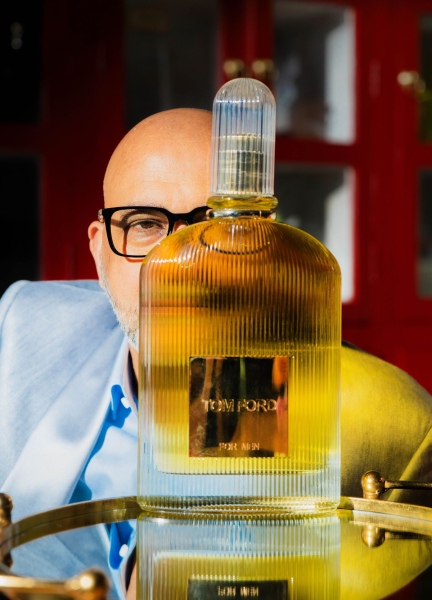
Facticerie owner Sudhir Gupta with a colossal bottle of Tom Ford For Men, which launched in 2007.
Until the middle of the 20th century, factices were often crafted by luxury glassmakers including Baccarat and Lalique to be exact replicas of their regular-sized counterparts, filled with colored water or alcohol to mimic the look of actual perfume. They grew bigger and bolder through the ’70s, ’80s, and ’90s, but by the early 2000s, their production had begun to peter out. Not only were they prohibitively expensive to produce, but the whole culture of retail had begun to shift.
Gupta’s obsession with factices began like something from a fairy tale. When he immigrated to the United States from India in the early 1990s, he took a job at a perfume wholesaler on Canal Street in New York City, hoping to earn enough money to save for a master’s degree in engineering. One fateful day, he was sent to the basement to clean—and that’s where he saw his first factice. “It was sitting on a shelf, covered in dust,” he says. “I had no idea what it was, but it felt as though it was calling to me.”
Gupta asked his boss if he could buy the bottle, and the man laughed at him: “He told me it was none of my business. But I kept asking, until finally he said he would take $2,000 for it.” It took Gupta a year to save the money on his meager salary, visiting the basement every day to gaze upon the treasure. “I didn’t know why I wanted the bottle or what I was going to do with it. I just loved it. That was the start of my journey,” he says. “Thirty-three years ago.”

The first factice that Gupta acquired, in the early 1990s: Nina Ricci L’Air Du Temps.

A two-foot-tall Lanvin Arpège, towering over vanity-appropriate versions.
The bottle in question was a supersized Nina Ricci L’Air Du Temps, now mounted on a slab of Lucite and displayed in a place of honor in the Facticerie. It’s easy to understand why it transfixed Gupta when he first encountered it. Designed by Marc Lalique in 1951, the bottle is fashioned from twisted glass, with a stopper in the shape of two soaring doves. It is probably one of the most famous perfume bottles of all time, but seeing it in this extra-large format is very rare. Gupta places a hand on it reverentially. “I still get goosebumps every time I look at it,” he says.
Hooked, Gupta began scouring flea markets looking for more factices, and making friends at department stores who would quietly sell him bottles they found in storage. “It was difficult,” he says, “because they were not supposed to be sold.” When he learned that nearly 40 factices had been trashed during a renovation of a Neiman Marcus in White Plains, his hobby took on new meaning. “I grew fearful that these bottles were going to be lost completely,” he says. “They were made to glorify beauty. But once their purpose was served or a new launch came along, they were discarded. No one thought to preserve them.”
Gupta never did get a master's in engineering. Instead, he started a business selling discontinued fragrances from home. He went on to establish his own perfume wholesale and distribution business, Eau De Luxe Ltd. (for regular-sized bottles). But he also made it his mission to rescue as many factices as he could, expanding his search nationally and then internationally, establishing a network of contacts that could help him liberate these large-scale flacons from dusty basements around the world. “My name, Gupta, means ‘guardian,’” he says. “I think I was destined to be a guardian, but didn’t realize what I was meant to protect until I discovered factices.”
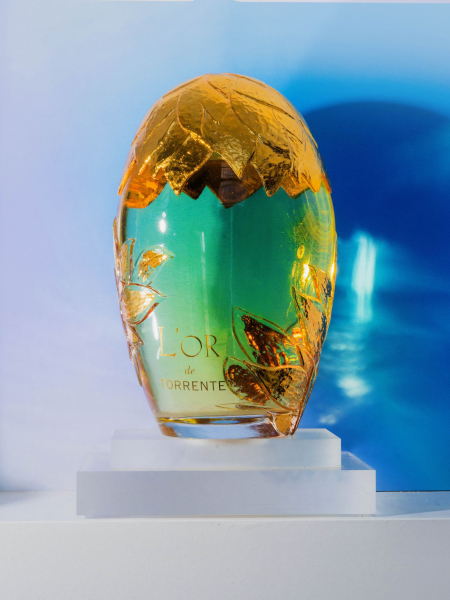
A toddler-sized L’Or de Torrente factice, made for French fashion house Torrente in the early 2000s.

A very royal Prince Matchabelli factice (the brand was founded in 1926 in New York by a Georgian prince).
The Facticerie itself was the brainchild of Acosta, a Venezuelan-born creative director and former floral designer. When the couple first met, Gupta’s entire collection was hidden away in boxes. “He is a very private person,” Acosta says. “I told him, ‘People need to know what you are preserving. You have to show these bottles.’” They had a smaller display space in Queens, New York, but during the pandemic, Acosta transferred the collection to Hackensack. “She said, ‘Just give [me] the credit card. I don’t want you to see it until it’s done,’” Gupta recalls. But just as she was about to reveal the new space to him, Gupta fell severely ill with COVID and was hospitalized for 20 days. “I thought he might never see it,” Acosta says. “That makes the Facticerie a very meaningful place for me.”
The Facticerie contains several rooms lined with shelves laden with gargantuan bottles, culminating in what Gupta considers to be his “greatest rescue”: The complete interior of Lascoff Drugs, a beloved Upper East Side pharmacy that closed in 2012 after 113 years in business. Gupta saved the interior from demolition, and Acosta had it installed in Hackensack, complete with the original Tiffany pendant lamps, glass display cabinets, and wooden wall units with drawers still labeled with the herbs and medicinal potions they once contained. It’s like a museum within a museum. “Lascoff was a landmark,” Gupta says, “a piece of New York history. Salvador Dalí used to come in and buy leeches there.” He shrugs. “He was a weird guy.”

Mercedes Acosta and the transplanted interior of Lascoff Drugs, a New York City pharmacy that closed in 2012 after 113 years.
Speaking of that weird guy, every bottle in Salvador Dalí's perfume line is housed at the Facticerie—it's the only complete set in the world. Really everywhere you look in this space there are treasures. Several Schiaparelli Shocking bottles, modeled after actress Mae West’s bodice in 1937, are arranged in a glamorous huddle opposite the 1990s Jean Paul Gaultier bottle for Le Male that they inspired. There are factices of Andy Warhol perfume from the early 2000s, a monumental 1980s sculpted serpent bottle from artist Nikki de Saint Phalle, an assortment of vintage Prince Matchabelli bottles made to look like royal crowns (the brand was founded in 1926 in New York by a Georgian prince), and a Valentino Vendetta from the early 1990s in the shape of a fan designed by the legendary bottle designer Serge Manseau. The rarest items in Gupta’s collection include a red Chanel No. 5 factice from 2018, a bottle of Three Flowers by American perfume pioneer Richard Hudnut dating to about 1915, and an elegant flacon for the Spanish perfumery Parera from the 1920s with a stopper in the shape of a woman, believed to be one of only two in the world (the other is in the Museu del Perfum in Barcelona).

A duo of Andy Warhol factices from the early 2002 flank a bust of the artist.
Gupta meticulously logs all of his acquisitions in a database, but says he often can’t remember where a bottle came from or even how much it is worth. He believes the most valuable factice in his collection could be a cobalt blue Lalique bottle for the Worth fragrance Je Reviens from 1932, which, he says “might have a market value of around $25,000, but I really don’t know,” and a 1920s Caron urn, “Les Fontaines Baccarat,” which he purchased from the estate of dollmaker Madam Alexander and is estimated to be worth about $100,000. The money, in Gupta’s view, is immaterial. “These are historical artifacts,” he says. “I don’t see them as bottles. They are memories cast in glass.”
ArrowArrow
Visitors to the Facticerie, he says, almost always have an emotional response, catching sight of a bottle they remember from another time in their lives that they had forgotten. “Whether it was their aunt, their grandmother, their father, their sister,” Gupta says, “they see the bottle, and it takes them back.” We often think about the way that smelling a fragrance can transport us through time, but these bottles have the same impact; their distinctive silhouettes are embedded in our minds, especially if we first saw them on the vanity of a loved one. “I worry that the new generation doesn’t care about bottles,” says Gupta. “They smell something today, and tomorrow another fragrance is coming. I don’t think that the industry understands anymore that the bottle is as important as the perfume.”
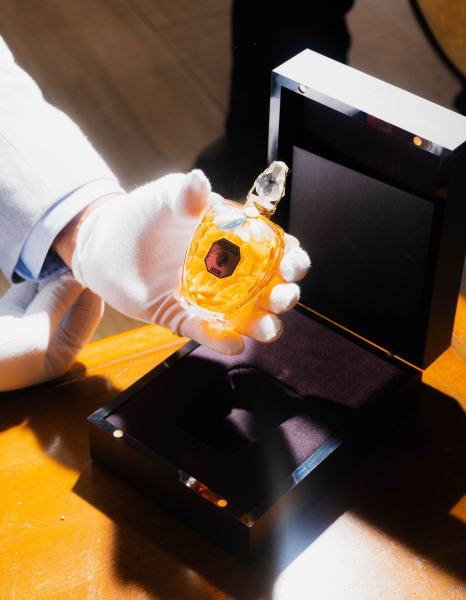
A rare example of the Guerlain “flacon tortue,” designed by Jacques Guerlain in 1913 to commemorate the opening of the house’s flagship boutique at 68 Avenue des Champs-Élysées in Paris. (The turtle-shaped bottle was a reference to the slow progress of the store’s construction.)
As Gupta moves through the Facticerie, he pulls out some of his favorites, including a limited edition early 2000s piece from Caron for Nuit de Noel in which the perfume is cradled in the basket of a Limoges porcelain hot air balloon, pointing out the care with which they were made, the weight of the materials, the artistry of the craftsmanship.
He has a special fondness for Guerlain bottles, and has an entire room dedicated to them. There are several, he says, that even Guerlain historians have never seen before, including a green-glass Shalimar flacon and a hand-painted porcelain vessel adorned with butterflies. These, like many of the Guerlains, are small bottles, sprinkled throughout his collection among the factices. He keeps a rare tortue bottle in the shape of a tortoise, made to commemorate the 1913 opening of the Champs-Élysées Guerlain boutique, stashed in a drawer. And he recently acquired the showstopping, feather-embellished Shalimar bottle made by Brazilian artist Janaïna Milheiro to mark the perfume’s centenary in 2025. “Guerlain has remained true to its identity across the generations. It has never been sold, and it has never lost touch with its history,” Gupta says. “For me, it’s not about my love for the fragrances, but about my love for the house itself.”

A 1.5-liter Guerlain Shalimar bottle made by Franco-Brazilian feather artist Janaïna Milheiro to mark the perfume’s 100th birthday in 2025.
“Every year we unveil new, one-of-a-kind bottles, which Gupta has carefully followed and often collected. He has spent countless hours researching archives and documenting his findings,” says Maxime Poulin, director of client experience at Guerlain US. “His collection is a stunning representation of the perfume industry’s history in the flesh. Walking through his archive, you are reminded that fragrances are part of our lives and are the strongest trigger of emotional memories.”
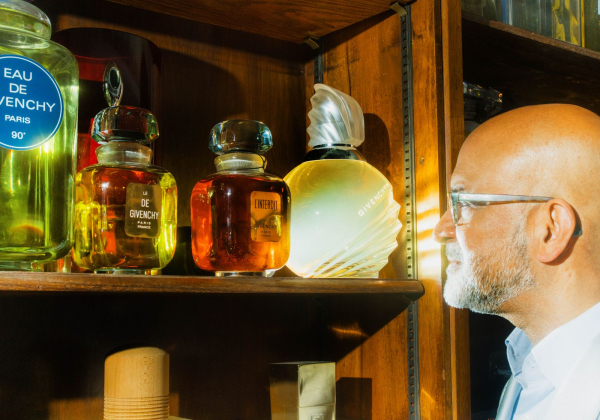
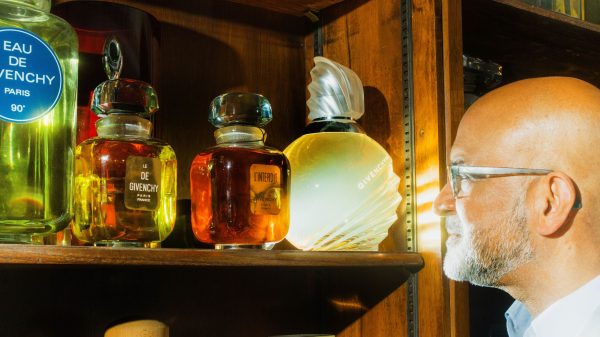
Gupta basking in the glow of a few of his Givenchy factices.
Currently, the Facticerie can only be visited by private appointment, but Gupta and Acosta hope to secure a larger space in Manhattan that will be open to the public. “We get thousands of emails from people who want to come visit the Facticerie, but as it is, it is very hard to coordinate,” says Acosta. Gupta’s vision is grand. “I want it to be the Louvre or the Smithsonian of factices,” he says. “I grew up very poor, and I have spent my life building this. All of the money I have ever made has gone into the collection. It is my dream that the world will see it.”
Gupta’s already getting started on that dream. First up? A collaboration with New York’s Fashion Institute of Technology (FIT), where a Facticerie exhibition dedicated to Guerlain was unveiled on June 9. Housed in the School of Graduate Studies Beauty Center, it will be the first in a rotating series of exhibitions, each dedicated to showcasing a different perfume house. Gupta is also planning to launch a Facticerie fragrance in 2028 (the scent is still TBD, but the bottle—of course—is already finalized); he hopes that it will draw even more attention to his precious bottles. “Factices are not simply display objects, but endangered artworks carrying memory, craftsmanship, and cultural history,” he says. “The perfumes may disappear, but these bottles will survive to tell their stories. We must make sure they are not lost.”

Rita Ora Took the Pastel Nail Trend to a Glittery New Level — See Photos
 Photo: Getty ImagesSave this storySave this story
I don't want to hear any complaints about how the pastel nail trend that's been transitioning us from spring to summer—we've seen it on Taylor Swift, Emily Blunt, Michelle Obama, and more recently—is too delicate, too sweet, too jejune. The prettiness is the point, of course, but just because a color is light and soft doesn't mean it can't have some edge to it, and Rita Ora's latest manicure is proof.
Ora performed at the Isle of Wight Festival over the weekend, wearing a completely impractical but absolutely fabulous striped, satin ensemble including a bra with a matching high-low hemline vest and rosette-embellished bloomers, not to mention some seriously fierce white, knee-high boots and sassy oval sunglasses. But one of my favorite details, easily, is her manicure.
 Photo: Getty Images
Nail artist Michelle Humphrey shared a close-up of the awesome nail design, featuring the palest possible pastel periwinkle base in a soft-focus jelly finish. Humphrey tells Allure that she then added slices of prismatic glitter over the translucent look to create an iridescent ombré effect that looks incredible on short nails like Ora's.
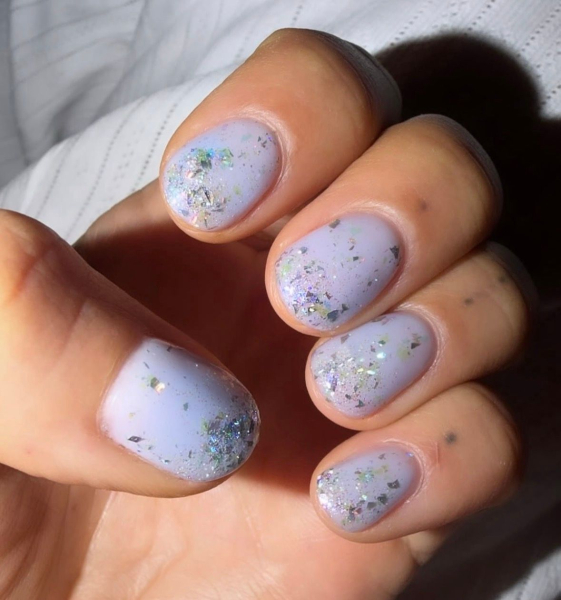 Photo: Michelle Humphrey
“K-beauty is obviously a huge thing at the moment, and I've recently just gone mad buying loads of Korean jelly gels, syrup gels,” Humphrey tells Allure. “Rita's such a huge fan of them, so I was delighted to get those out and experiment.”
Humphrey also shares that photos don't do the entire manicure justice because her right hand is actually different from the left. Instead of periwinkle, they were tonal butter yellow and soft green, making this pastel masterpiece even more interesting than we originally thought.
 Photo: Getty Images
As a short-nail-haver myself, I can attest that I'm definitely taking screenshots of this look to the nail salon for my next manicure.
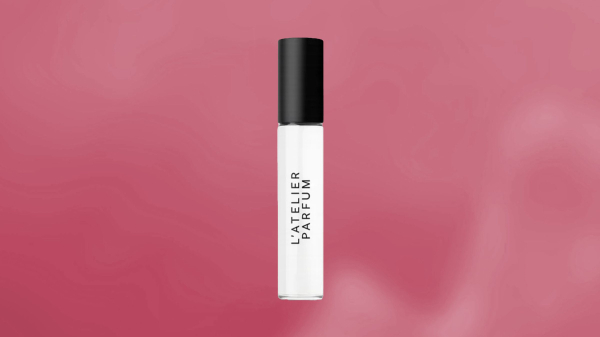
The L’atelier Parfum Coeur de Petales Hair & Body Mist Smells Like a Stroll Through Jardin du Luxembourg—Review
 Save this storySave this story
TL;DR:
- What it is: A French hair and body mist
- What it does: Gives both strands and pulse points a jolt of flowery fragrance
- Who it’s for: Anyone looking for a chic, floral-forward perfume they can take on the go
Over the last few years, my relationship with floral fragrance has ebbed and flowed. Some days, I love it. Others, I’m reaching for something a little more low-key and skin-like.
But on those days when the floral side of me takes over, the L’atelier Parfum Coeur de Petales Hair & Body Mist makes for the perfect companion. The French, floral-forward hair and body mist—made with notes of rose, violet, and jasmine—is a beautiful mix of fresh, green, and flowery.
It reminds me of a leisurely stroll through the lush Jardin du Luxembourg in Paris. Just a spritz or two instantly transports me to the iconic garden's sprawling flowers and fruit trees I once gawked at during a summer vacation with my husband.
Perhaps it’s time for me to book another trip to… smell the roses. Until, then I’ll keep this mini mist in my bag and spritz on the go.
The L’atelier Parfum Coeur de Petales Hair & Body Mist is in the June Allure Beauty Box.
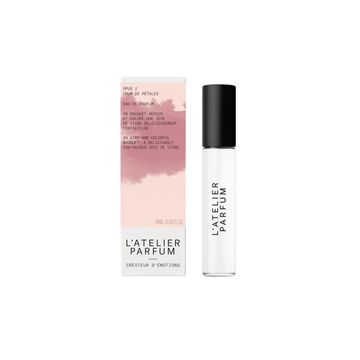
L’atelier Parfum Coeur de Petales Hair & Body Mist
Zendaya’s Liquid Leather Manicure Couldn’t Be Cooler—See the Photos
 Getty ImagesSave this storySave this story
People have been paying a lot of attention to Zendaya's hands lately. Obviously there's one very important reason why we've got a laser focus on her fingers—that'd be her recent marriage to longtime partner and Spider-Man costar Tom Holland—but we're also keeping very close watch on what she's doing with her nails. Because even though Z is pretty devoted to the classic milk bath neutral, when she deviates from that neutral palette, she does so in a big, surprising way.
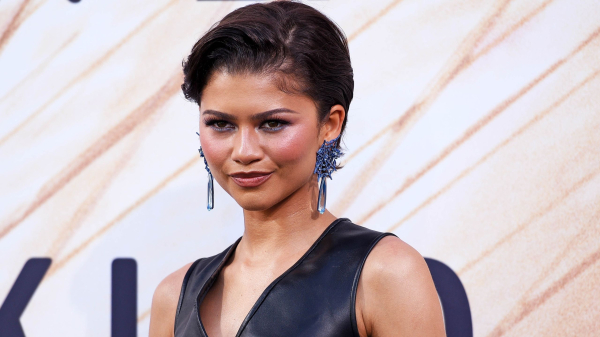
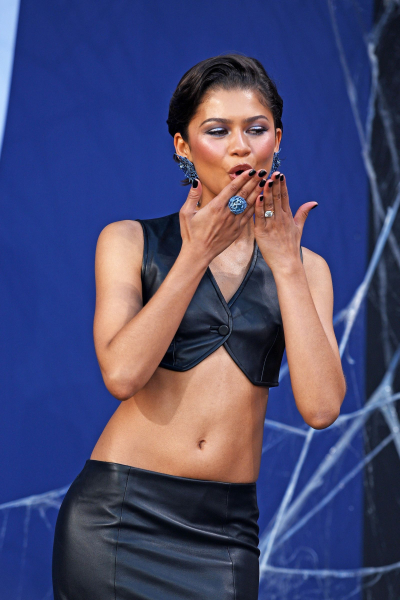
Zendaya and Holland are currently in Berlin promoting Spider-Man: Brand New Day, the latest installment of the Spider-Man franchise that they've starred in since 2017. For said premiere, she slipped into a matching black leather cropped vest and maxi skirt from Louis Vuitton and decided against her go-to milky manicure, instead matching the ensemble with a sleek, shiny black instead.
 Getty Images
Zendaya typically keeps her nails pretty short and prefers a soft square shape, both of which were present in this most recent set. The shiny black color mimicked the liquid texture of her Vuitton outfit and matched the edgy, even gothy vibe of her web earrings and ring. (And yes, she was wearing her diamond engagement ring and a slim wedding band, in case you're curious.) The reflective finish was reminiscent of patent leather and picked up the shimmery tones on her eyes too.
Though neutral nails have ruled the red carpet in recent years, a short black nail is equally classic; who can forget Selena Gomez's “velvet noir” nails at the Golden Globes, or the black nail dominance of the mid-2000s? Sure, black nails don't exactly scream summer, especially when it feels like everyone is wearing pastels, but that's what makes them such a cool choice for tips and toes come June, July, and August.
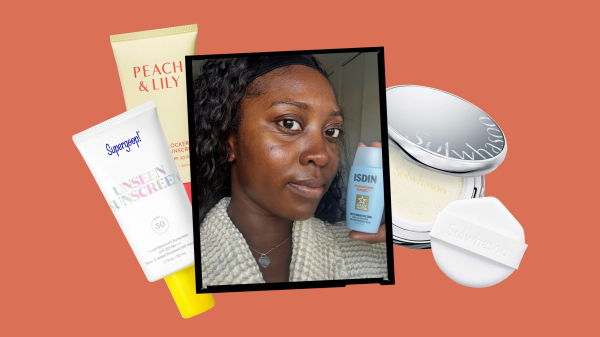
9 Best Chemical Sunscreens That Won’t Leave a White Cast
 Collage: Paula Balondo; Source images: Courtesy of brandsSave this storySave this story
The best chemical sunscreens have come a long way from the greasy, sting-your-eyes formulas many of us grew up with. Today's versions are airy, elegant, and often so comfortable to wear that you'll forget you even have SPF on—a major win, considering sunscreen is one of the most important steps in any skin-care routine. “Unlike mineral sunscreens, which sit on top of the skin, chemical sunscreens use organic UV filters that absorb UV radiation and convert it into heat, which is then released from the skin,” says Pearl Rimtepathip, MD, a board-certified dermatologist based in Atlanta. “These formulas tend to feel especially lightweight and are well-suited for everyday wear.”
Another perk? Because chemical filters are absorbed into the skin, they “generally blend in seamlessly without leaving behind a white cast,” she says. Whether you prefer a featherlight fluid, a hydrating serum, or a makeup-gripping primer, there's a chemical sunscreen for nearly every skin type, concern, and personal preference. Because at the end of the day—and whether you choose a chemical or mineral formula—“the best kind of sunscreen is the one you will use and apply the most,” says Dr. Rimtepathip.
Our Top Chemical Sunscreens
- Best Overall: Peach & Lily Beam Blocker Invisible Sunscreen SPF 30, $34
- Best Tinted: EltaMD UV Clear Tinted SPF 46, $47
- Best Drugstore: La Roche-Posay Anthelios UVAir Serum Sunscreen SPF 50, $40
- Best for Dull Skin: Isdin Fusion Water Magic SPF 40, $38
Frequently Asked QuestionsLargeChevron
- What is a chemical sunscreen?
- What's the difference between chemical and mineral sunscreen?
- Are chemical sunscreens safe?
- Are chemical sunscreens "bad" for sensitive skin?
- Meet the experts
- How we test and review products
- Our staff and testers
Best Overall: Peach & Lily Beam Blocker Invisible Sunscreen SPF 30
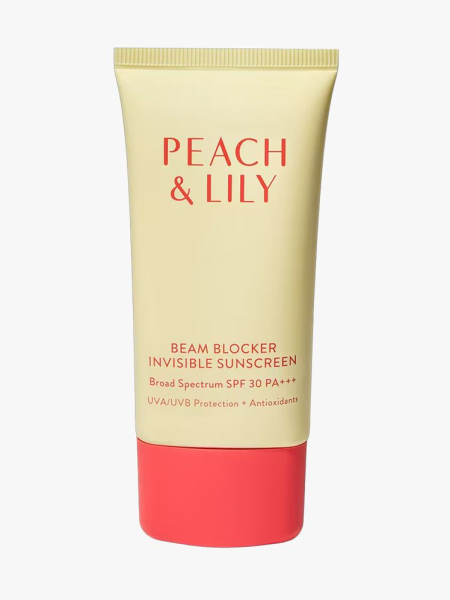 Save to wishlist
Peach & Lily
Beam Blocker Invisible Sunscreen SPF 30
Ulta Beauty
Allure senior beauty editor Jesa Marie Calaor applying the Peach & Lily Beam Blocker Invisible Sunscreen
Jesa Marie Calaor
Why it's worth it: Our testers dutifully submitted before-and-after photos for Peach & Lily’s Beam Blocker Invisible Sunscreen SPF 30—but you'd be hard-pressed to spot any difference, because this formula is truly invisible. The lightweight lotion melts into skin without a hint of white cast and feels more like a silky moisturizer than a sunscreen. In addition to broad-spectrum protection, it's packed with soothing ingredients like ectoin, Centella asiatica, and bisabolol to keep redness and irritation at bay, while antioxidants like green tea and ferulic acid defend against environmental stressors. Niacinamide brightens, ceramides and panthenol support the skin barrier, and the fast-absorbing texture creates a perfect canvas under makeup, so foundation glides on smoothly without pilling or patchiness.
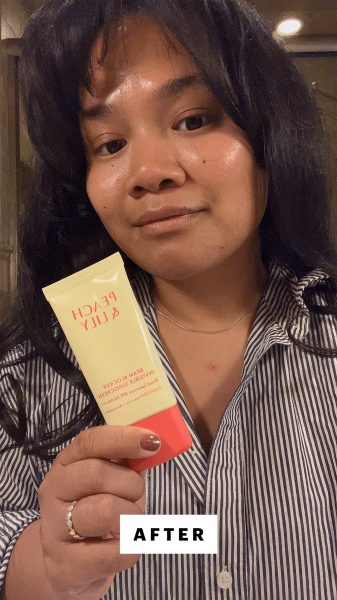
Calaor after applying the Peach & Lily Beam Blocker Invisible Sunscreen
Jesa Marie Calaor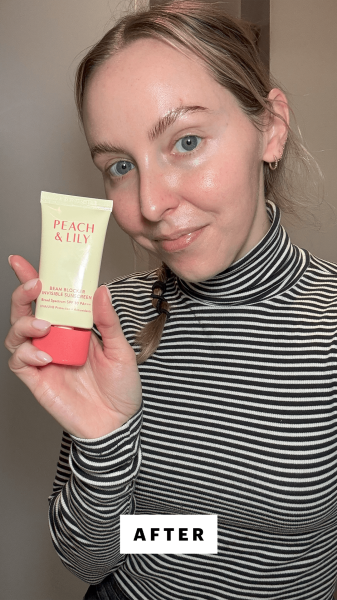
Allure beauty director Kinonen after applying the Peach & Lily Beam Blocker Invisible Sunscreen
Sarah Kinonen
Tester feedback from senior beauty editor Jesa Marie Calaor
LargeChevron
“My skin is dehydrated year-round, so all of my face products need to be hydrating. This one delivers, creating that satisfying "squish" as I massage it in. It feels like a moisturizer and absorbs within seconds of application. It acts as a fantastic base for makeup—smoothing dry patches and never pilling under my skin tints or liquid foundations. I use it every day on my face, neck, and on and behind my ears. I even gave it to my dad to try, and he said the formula feels like a regular facial moisturizer, which is a big plus for someone hesitant to use sunscreen daily.” —Jesa Marie Calaor, senior beauty editor
Tester feedback from beauty director Sarah Kinonen
LargeChevron
“I use this sunscreen every day! I was obsessed after the first slathering of this stuff. It's lightweight, easily blendable, and doesn't irritate my eyes, which is a feat for a chemical sunscreen. (There's nothing worse than being mid-workout, trying to blink out the sting from the SPF sweat.) It also layers well under… everything. Foundation? Yep. Copious amount of liquid blush? Also yes. It never pills and isn't greasy or sticky, and most importantly, it doesn't irritate my easily inflamed skin. A true win!” —Sarah Kinonen, beauty director
More to know
LargeChevron
- Sunscreen filter: 3% avobenzone, 7% homosalate, 5% octisalate
- Key ingredients: ceramides, panthenol, hyaluronic acid, ectoin, bisabolol, Centella asiatica, green tea, ferulic acid
- Tinted: no
- Water-resistant: not disclosed
- Fragrance-free: yes
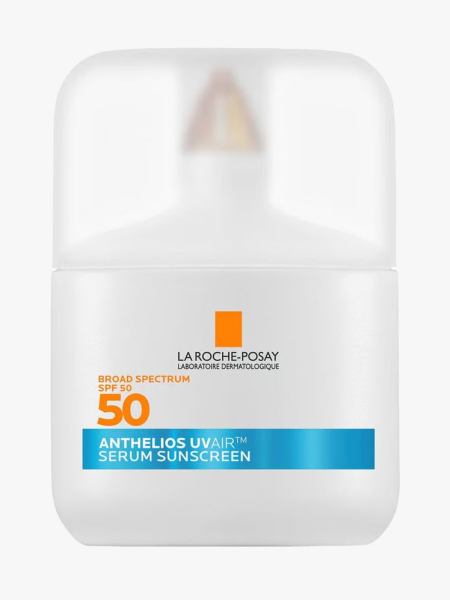
Best Drugstore: La Roche Posay Anthelios UVAir Serum Sunscreen SPF 50
 Save to wishlist
La Roche-Posay
Anthelios UVAir Serum Sunscreen SPF 50
Amazon
Dermstore
Ulta Beauty
Allure contributing commerce editor Deanna Pai applying the La Roche Posay Anthelios UVAir SPF 50 Serum Sunscreen
Deanna Pai
Why it's worth it: If you usually find yourself "forgetting" sunscreen because it feels greasy or heavy, La Roche-Posay's Anthelios UVAir SPF 50 Serum Sunscreen may finally win you over. The featherlight formula lives up to its "air" name, disappearing into skin with an invisible finish that feels more like a silky serum thanks to glycerin and hyaluronic acid that provide long-lasting hydration. The brand's proprietary Cell-Ox B3 Shield technology combines UV filters with antioxidants like vitamin E, senna alata leaf extract, and niacinamide to defend skin against not only sun damage, but also free radicals and pollution that can contribute to premature aging. It also stands up to high heat, humidity, and pollution, a.k.a. the unholy trinity of summer skin woes, and “layers nicely under makeup, so it’s an excellent option for daily use,” says Dr. Kil.
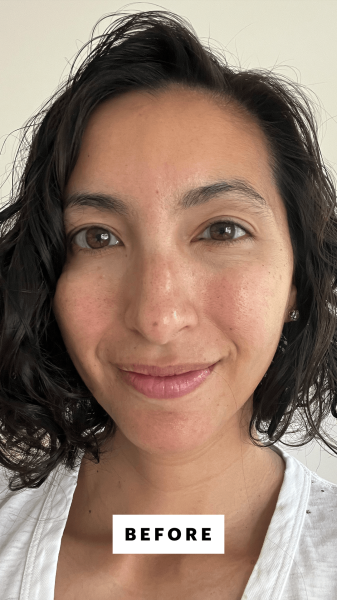
Pai before applying the La Roche Posay Anthelios UVAir SPF 50 Serum Sunscreen
Deanna Pai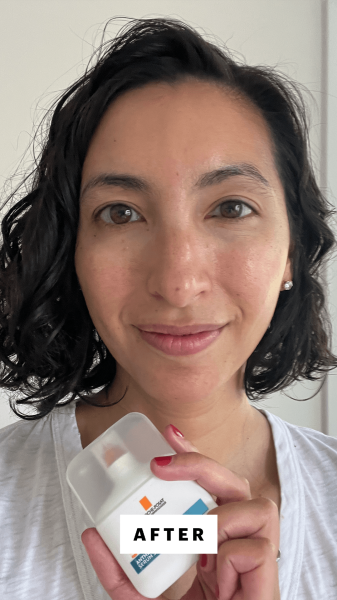
Pai after applying the La Roche Posay Anthelios UVAir SPF 50 Serum Sunscreen
Deanna Pai
Tester feedback from contributing commerce editor Deanna Pai
LargeChevron
“In the summer, sunscreen gets complicated: I sweat during my workout, shower, and then continue to sweat. That's why this latest La Roche-Posay sunscreen has been a godsend in my routine: It blends in quickly and feels virtually undetectable. It's been especially helpful for humid days when I want to re-up, since I can layer it on ahead of a walk or park hang without my skin looking or feeling greasy.” —Deanna Pai, contributing commerce editor
More to know
LargeChevron
- Sunscreen filter: 3% avobenzone, 7% homosalate, 5% octisalate, 7% octocrylene
- Key ingredients: glycerin, niacinamide, hyaluronic acid, vitamin E, senna alata leaf
- Tinted: no
- Water-resistant: not disclosed
- Fragrance-free: yes
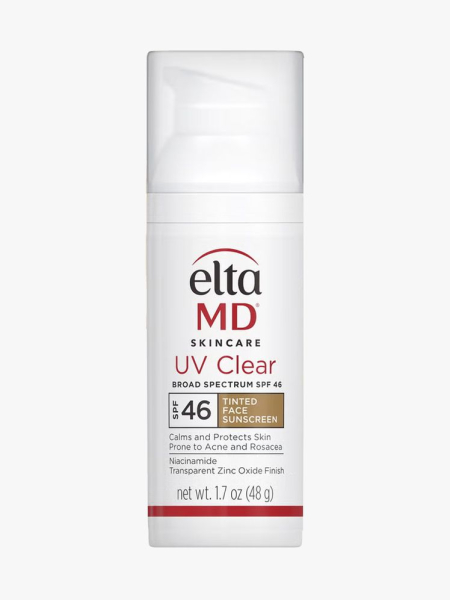
Best Tinted: EltaMD UV Clear Tinted SPF 46
 Save to wishlist
EltaMD
UV Clear Tinted SPF 46
Amazon
EltaMD
Allure contributor Jailynn Taylor applying the EltaMD UV Clear Tinted SPF 46
Jailynn Taylor
Why it's worth it: When you want to even out your complexion but don't feel like wearing a full face of makeup, EltaMD’s UV Clear Tinted SPF 46 strikes the perfect balance. “EltaMD was one of the earliest brands to incorporate iron oxides in its tinted sunscreen formulation,” says Erin Kil, MD, a board-certified dermatologist based in New York City. “Iron oxides, which are found in tinted sunscreens, help block visible light, a known trigger for melasma, particularly in medium to deeper skin tones," adds Asmi Berry, DO, is a board-certified medical and cosmetic dermatologist based in Glendale, California. Plus, the sheer tint subtly blurs redness and discoloration without looking heavy or masking your skin. "The natural-looking tint, combined with niacinamide, makes this a great option for those prone to hyperpigmentation, helping to even out skin tone," says Dr. Rimtepathip.
Technically, it's a hybrid sunscreen, pairing 9% zinc oxide with 7.5% octinoxate—a combination that can be especially appealing for those who want the gentle, sensitive skin-friendly benefits of mineral SPF with a lighter feel and less risk of a white cast. The formula also features hyaluronic acid to boost hydration, vitamin E to defend against free radicals, and lactic acid for gentle skin-smoothing benefits. Since “it's fragrance-free, dye-free, and oil-free, it's also well-suited for acne-prone skin,” says Dr. Rimtepathip.
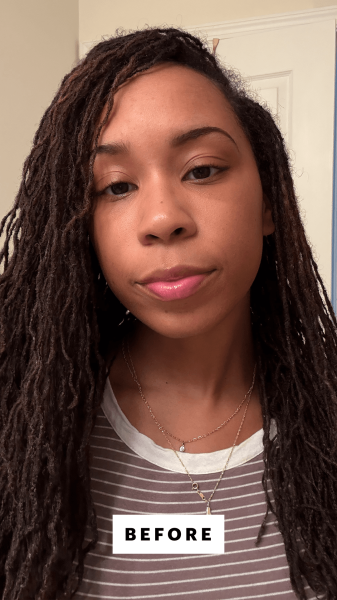
Taylor before applying the EltaMD UV Clear Tinted SPF 46
Jailynn Taylor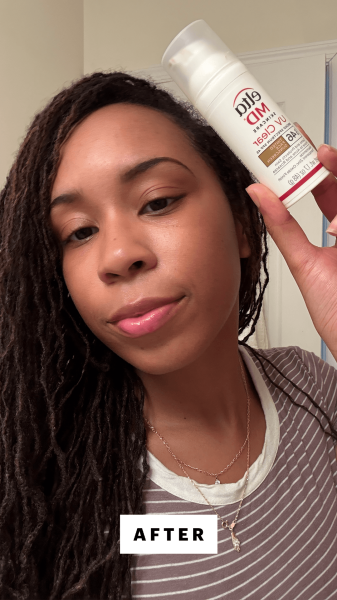
Taylor after applying the EltaMD UV Clear Tinted SPF 46
Jailynn Taylor
Tester feedback from contributor Jailynn Taylor
LargeChevron
"EltaMD’s Tinted Sunscreen has become a staple in my morning routine. It’s more on the sheer side, so I still reach for concealer when I need to cover deeper discoloration, but the lightweight formula is perfect for evening out my complexion on days when I just need to run errands without doing a full face. I love that it doesn’t transfer onto my clothes or hands (I chronically touch my face), and best of all, it hasn’t clogged my pores or caused any breakouts, like other sunscreens I’ve tested.” —Jailynn Taylor, contributor
More to know
LargeChevron
- Sunscreen filter: 9% zinc oxide, 7.5% octinoxate
- Key ingredients: 5% niacinamide, hyaluronic acid, vitamin E, lactic acid
- Tinted: yes
- Shades: 1
- Water-resistant: not disclosed
- Fragrance-free: yes
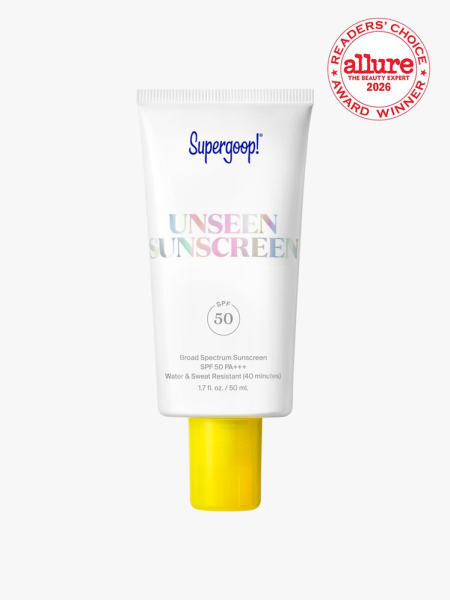
Best for Sensitive Skin: Supergoop Unseen Sunscreen SPF 50
 Save to wishlist
Supergoop
Unseen Sunscreen SPF 50
Amazon
Nordstrom
Ulta Beauty
Allure contributing commerce writer Christa Joanna Lee
Christa Joanna Lee
Why it's worth it: Chemical sunscreen can be a tough sell for people with sensitive skin, for whom certain filters (like oxybenzone) can be irritating. Supergoop’s Unseen Sunscreen SPF 50 is a fragrance-free formula that’s free of both, making it a gentler option for those who typically struggle with chemical SPF. The invisible formula melts into skin and “has a similar texture to a velvety makeup primer, smoothing over pores and helping complexion products layer with ease,” says Dr. Rimtepathip. There’s also soothing chamomile-derived bisabolol and licorice root to calm redness and support a more even-looking complexion, while meadowfoam seed oil reinforces the skin barrier by locking in moisture. Just keep in mind that because the formula goes on completely clear with a matte finish, it can be easy to miss spots—so don't be shy about applying generously.
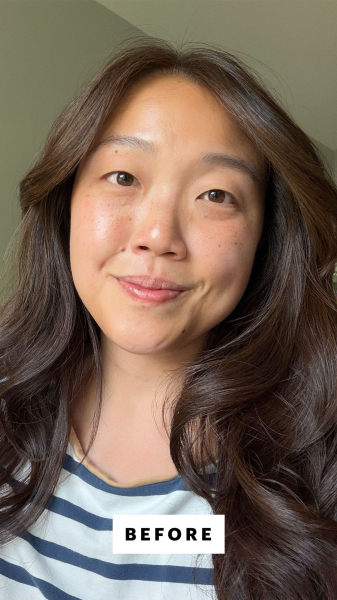
Lee before applying the Supergoop Unseen Sunscreen SPF 50
Christa Joanna Lee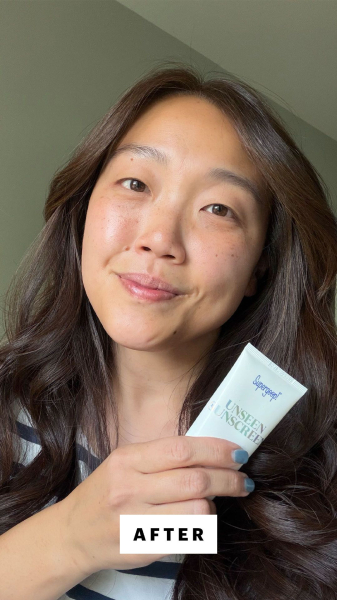
Lee after applying the Supergoop Unseen Sunscreen SPF 50
Christa Joanna Lee
Tester feedback from contributing commerce writer Christa Joanna Lee
LargeChevron
"After 13 years together, my husband has finally gotten into the habit of wearing sunscreen every day—and the one he steals from me most often is Supergoop Unseen Sunscreen SPF 50. He has oily skin, I have dry/sensitive skin, yet the primer-like, semi-matte formula works great for both of us. It glides on completely clear, feels weightless, and has a cushiony gel texture that dries down to a soft, almost powder-like finish. The only slight drawback is that because it's totally invisible, it can be hard to tell whether you've covered every inch of your face. But as long as I stick to the two-finger rule for application, I trust the process." —Lee, contributing commerce writer
More to know
LargeChevron
- Sunscreen filter: 3% avobenzone, 7% homosalate, 5% octisalate, 9% octocrylene
- Key ingredients: bisabolol, licorice root, meadowfoam seed oil
- Tinted: no
- Water-resistant: 40 minutes
- Fragrance-free: yes
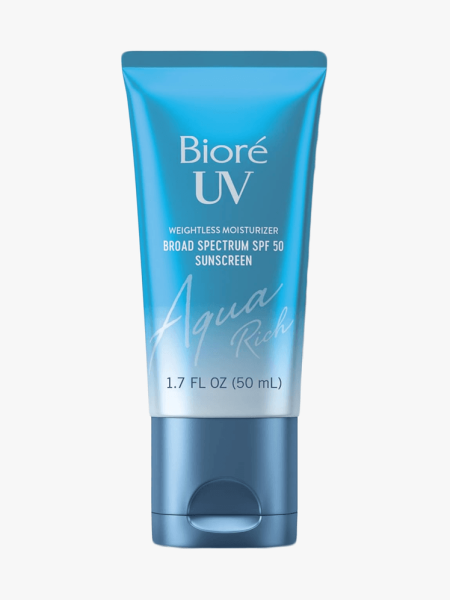
Best for Oily Skin: Bioré UV Aqua Rich Weightless Moisturizer SPF 50
 Save to wishlist
Bioré
UV Aqua Rich Weightless Moisturizer SPF 50
Amazon
Ulta Beauty
Why it's worth it: If you have oily skin, chances are you've had at least one sunscreen leave you looking shinier than you bargained for. Bioré’s UV Aqua Rich Weightless Moisturizer SPF 50—a 2024 Allure Best of Beauty—feels practically weightless on skin, absorbing quickly without clogging pores or leaving behind a greasy residue. Yet despite its barely-there texture, it still delivers a big dose of hydration thanks to “glycerin and sodium hyaluronate, which draw water into the skin without weighing it down,” says Geeta Yadav, MD, board-certified dermatologist based in Toronto, Canada. The only caveat: It contains added fragrance, so those with sensitive skin may want to patch-test first.
Allure managing editor Alessandra Foresto applying the Bioré UV Aqua Rich Weightless Moisturizer SPF 50
Alessandra Foresto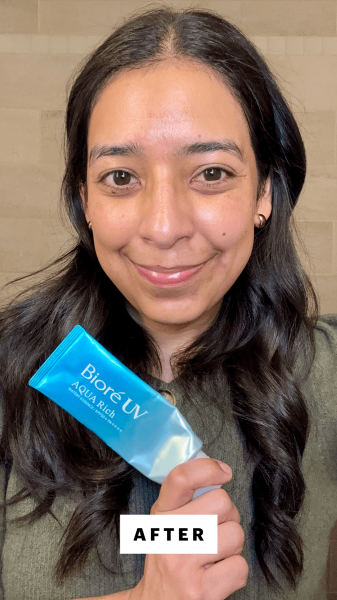
Foresto after applying the Bioré UV Aqua Rich Weightless Moisturizer SPF 50
Alessandra Foresto
Tester feedback from managing editor Alessandra Foresto
LargeChevron
“I truly use this sunscreen up to the last drop (I'm due for a restock!). That's because the rumors (and social videos) are true; this sunscreen is superior. Its gel-like, watery texture gives your skin a glowy finish, but doesn't feel greasy. The SPF doesn't travel into your eyes or make them sting. And it doesn't leave a white cast behind on my brown skin. The formula is so lightweight, but it contains hyaluronic acid, so it feels super moisturizing and gives you a nice dewy look. My husband is also a huge fan of this SPF because it spreads nicely over his beard without leaving behind flakes or peeling. He uses it on his body too and finds it doesn't give white T-shirts that yellowy tint that some sunscreens leave behind.” —Alessandra Foresto, managing editor
More to know
LargeChevron
- Sunscreen filter: 3% avobenzone, 10% homosalate, 5% octisalate, 5% octocrylene
- Key ingredients: glycerin, sodium hyaluronate
- Tinted: no
- Water-resistant: not disclosed
- Fragrance-free: no
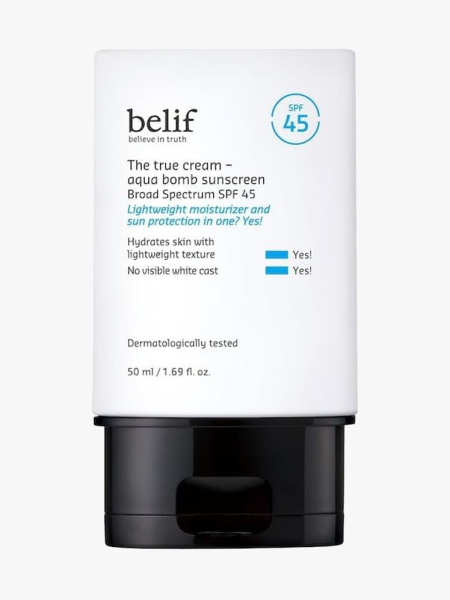
Best for Dry Skin: Belif Aqua Bomb Sunscreen SPF 45
 Save to wishlist
Belif
Aqua Bomb SPF 45 Hydrating Niacinamide Sunscreen PA++++
Amazon
Sephora
Lee applying the Belif Aqua Bomb Sunscreen SPF 45
Christa Joanna Lee
Why it's worth it: If you're already devoted to Belif's editor-favorite The True Cream Aqua Bomb Moisturizer, Aqua Bomb Sunscreen SPF 45 delivers a similar burst of hydration—with the added benefit of daily sun protection. It retains many of the hallmarks that made the original viral, including glycerin, panthenol, niacinamide, and Belif's signature botanical blend of oat seed, calendula, and other soothing herbs.
But compared to the moisturizer, this sunscreen relies less on richer conditioning ingredients like shea butter and squalane and more on lightweight silicones and texture-enhancing polymers, giving it a smoother, silkier feel that wears more like a lotion-primer hybrid than a gel-cream. It glides effortlessly across skin, layers nicely under makeup, and leaves behind a smooth, even finish. “It's refreshing and quick-absorbing while still leaving skin feeling plumped and comfortable,” says Jane Yoo, MD, a dual board-certified dermatologist and Mohs surgeon based in New York City.
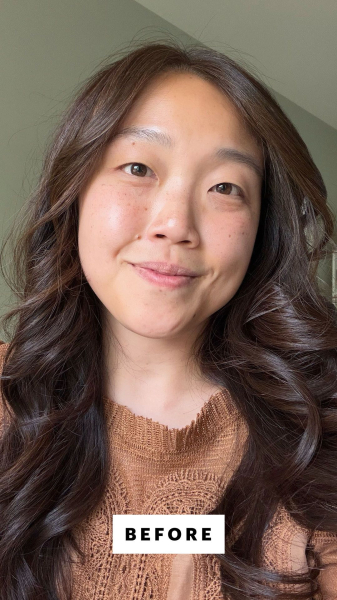
Lee before applying the Belif Aqua Bomb Sunscreen SPF 45
Christa Joanna Lee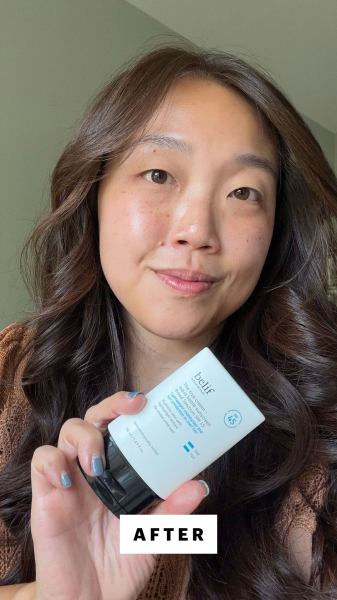
Lee after applying the Belif Aqua Bomb Sunscreen SPF 45
Christa Joanna Lee
Tester feedback from Lee
LargeChevron
“I have yet to try the famous Belif Aqua Bomb Moisturizer (I know—sacrilege), but after practically emptying my tube of Aqua Bomb Sunscreen SPF 45 in just a couple of weeks, I'm not sure I need to. This sunscreen checks every box on my wish list: It's incredibly lightweight and moisturizing, has a cream texture yet absorbs with the speed and ease of a gel, and leaves behind absolutely zero white cast. The results may not be dramatic in a before-and-after photo, but the difference is immediately noticeable once it's on your skin. I couldn't ask for much more from a sunscreen.” —Christa Joanna Lee, contributing commerce writer
More to know
LargeChevron
- Sunscreen filter: 2.7% avobenzone, 9% homosalate, 4.5% octisalate, 9% octocrylene
- Key ingredients: glycerin, panthenol, niacinamide, oat seed, calendula
- Tinted: no
- Water-resistant: not disclosed
- Fragrance-free: yes
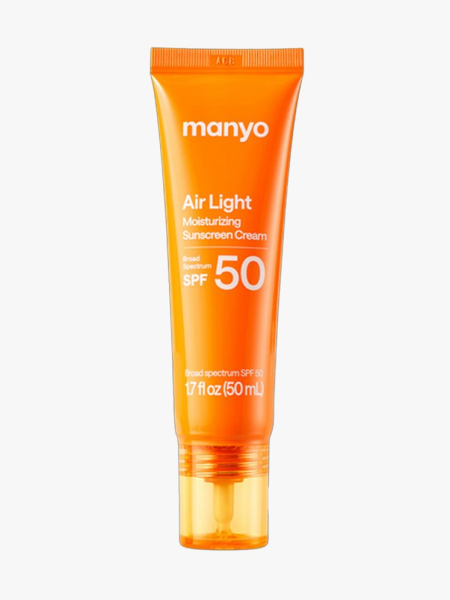
Best for Combo Skin: Manyo Air Light Moisturizing Sunscreen Cream SPF 50
 Save to wishlist
Manyo
Air Light Moisturizing Sunscreen Cream SPF 50
Amazon
Ulta Beauty
Allure commerce editor Sarah Han applying the Manyo Air Light Moisturizing Sunscreen Cream SPF 50
Sarah Han
Why it’s worth it: As people with combination skin know all too well, finding a sunscreen can be tricky: Too rich, and your T-zone turns slick; too lightweight, and your cheeks are craving moisture. Manyo’s Air Light Moisturizing Sunscreen Cream SPF 50 walks that fine line, thanks in part to ensulizole, a lesser-known but FDA-approved UV filter prized for its water-solubility and lightweight feel.
Yet it still delivers plenty of hydration via nano-hyaluronic acid and hydrolyzed hyaluronic acid. Unlike traditional hyaluronic acid, which primarily hydrates the skin's surface, these smaller forms can penetrate more deeply for longer-lasting hydration and a plumper feel. If you’re dealing with uneven skin tone, the formula also helps address discoloration with tranexamic acid, niacinamide, and vitamin E, which work together to fade existing dark spots and defend against future pigmentation.
Tester feedback from commerce editor Sarah Han
LargeChevron
“Korean sunscreens are so good that it's honestly hard for one to stand out from the rest. (I try a lot of them, ok?) However, thanks to the US banning sales of non-FDA-approved sunscreen filters, our options have gotten a bit more interesting. I've been testing this Manyo Air Light SPF for a few months, thanks to Best of Beauty testing, and have been smitten with it ever since. It has that serum-y texture I love in my sunscreens that melts into my skin super quickly—because I can't be bothered to rub in sunscreen for 15 seconds when there are faster options! It's super breathable and layers beautifully without a trace of pilling.” —Sarah Han, commerce editor
More to know
LargeChevron
- Sunscreen filter: 2.5% ensulizole, 5% homosalate, 4.5% octisalate, 5% octocrylene
- Key ingredients: tranexamic acid, hyaluronic acid, niacinamide
- Tinted: no
- Water-resistant: not disclosed
- Fragrance-free: yes
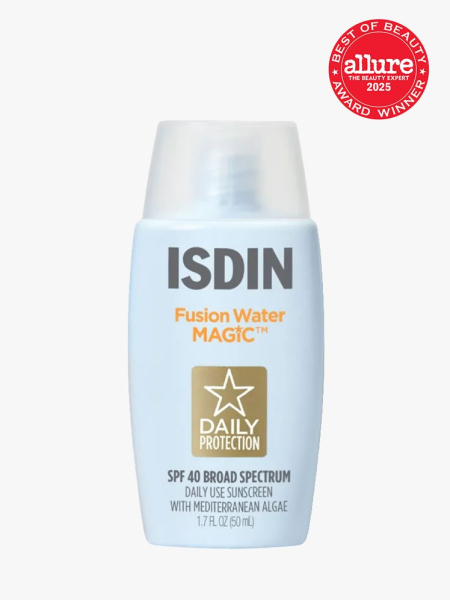
Best for Dull Skin: Isdin Fusion Water Magic SPF 40
 Save to wishlist
Isdin
Fusion Water Magic SPF 40
Amazon
Sephora
Allure associate beauty editor Annie Blay-Tettey applying the Isdin Fusion Water Magic SPF 40
Annie Blay-Tettey
Why it’s worth it: We'd never promise magic in a bottle, but Isdin's Fusion Water Magic SPF 40 comes pretty close with its remarkably lightweight, fluid texture. The 2025 Best of Beauty Award winner glides onto skin and disappears in seconds, leaving no heaviness or greasy residue behind. The formula also gives dull skin a subtle pick-me-up thanks to hydrating ingredients like glycerin and sodium hyaluronate, which keep it looking plump and fresh. "It also contains Mediterranean algae extract to protect against visible-light-induced pigmentation changes," says Dr. Kil. Plus, there’s silica to softly blur the look of pores and texture without hindering your glow.
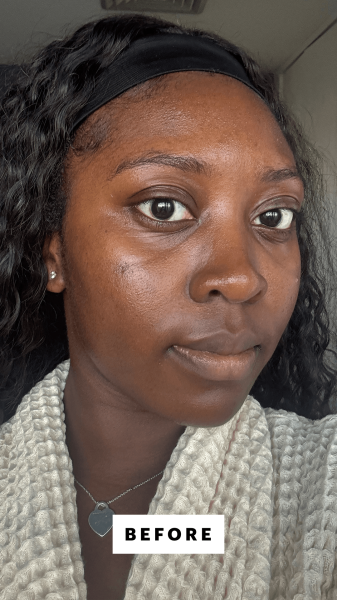
Blay-Tettey before applying the Isdin Fusion Water Magic SPF 40
Annie Blay-Tettey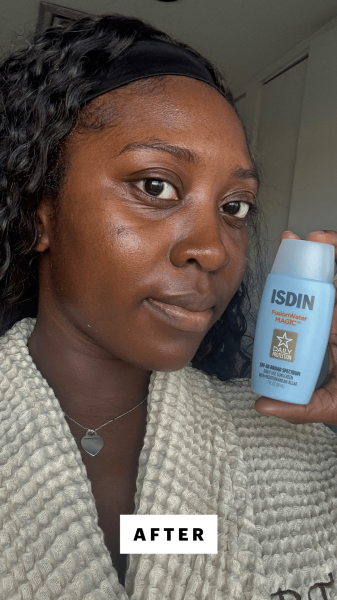
Blay-Tettey after applying the Isdin Fusion Water Magic SPF 40
Annie Blay-Tettey
Tester feedback from associate beauty editor Annie Blay-Tettey
LargeChevron
“This is one of the best sunscreens I've ever used (and I've used many). I love how lightweight yet deeply moisturizing this lotion is. At first, it leaves my skin with a noticeable glow, but as the day goes on, it settles into my skin, not leaving it greasy or shiny. I barely get the sense that I have SPF on my face when I'm wearing it, but I love knowing that I'm covered.” —Annie Blay-Tettey, associate beauty editor
More to know
LargeChevron
- Sunscreen filter: 9% octocrylene, 7.3% homosalate, 4.5% octisalate, 2.7% avobenzone
- Key ingredients: sodium hyaluronate, glycerin, vitamin E, microalgae
- Tinted: no
- Water-resistant: not disclosed
- Fragrance-free: no
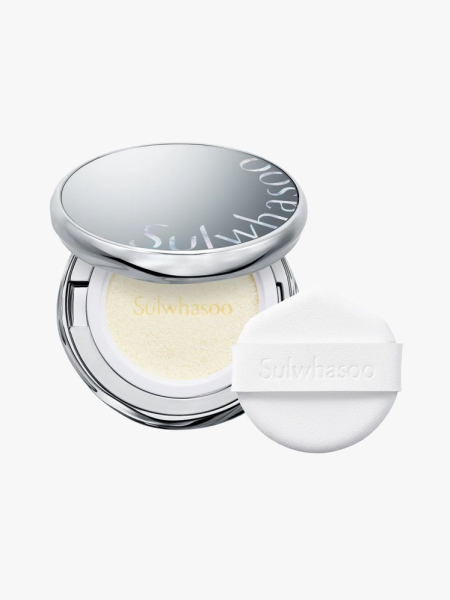
Best Over Makeup: Sulwhasoo UV Wise On-the-Go Sun Cushion
 Save to wishlist
Sulwhasoo
UV Wise On-the-Go Sun Cushion
Sulwhasoo
Allure social director Kassidy Silva applying the Sulwhasoo UV Wise On-the-Go Sun Cushion
Kassidy Silva
Why it's worth it: We all know we should reapply sunscreen every two hours, but putting SPF on over makeup is often easier said than done. “Re-application is the single biggest gap in sun protection behavior, as my patients feel that touching up sunscreen over makeup feels impossible,” says Dr. Yoo. Enter Sulwhasoo UV Wise On-the-Go Sun Cushion SPF 50+, a hybrid formula that pairs chemical filters with titanium dioxide to deliver high-level protection in a makeup-friendly cushion compact. The lightweight formula layers seamlessly both under and over makeup without pilling, smudging, or disturbing foundation, thanks in part to its included applicator, which features tiny “pores” that disperse the formula evenly for a smooth finish.
Beyond SPF, five types of hyaluronic acid and squalane replenish moisture, while antioxidant-rich botanicals like white ginseng and mulberry support the skin barrier and keep skin looking balanced and luminous. “It has a soft, skin-blurring finish that won’t settle into uneven texture or fine lines,” adds Dr. Yoo.
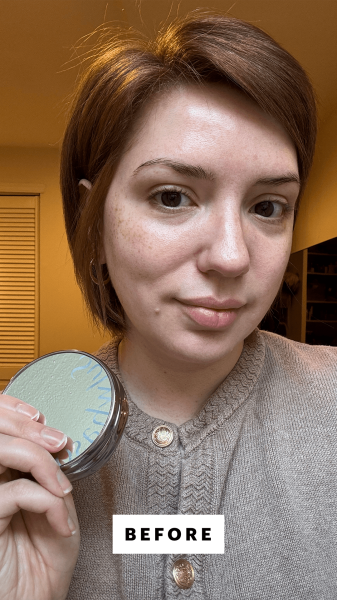
Silva before applying the Sulwhasoo UV Wise On-the-Go Sun Cushion
Kassidy Silva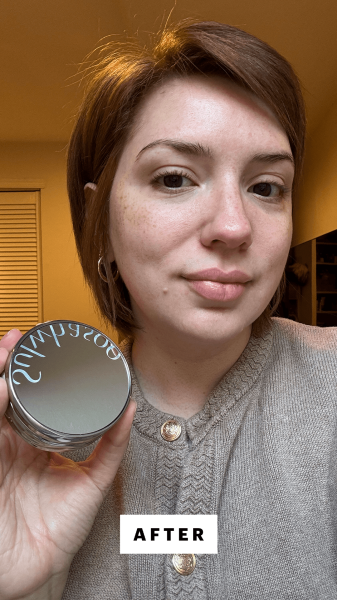
Silva after applying the Sulwhasoo UV Wise On-the-Go Sun Cushion
Kassidy Silva
Tester feedback from social director Kassidy Silva
LargeChevron
“I'd love to be a 'skincare and go' type of person, but I love a full face of makeup. The new Sulwhasoo UV Wise On-the-Go Sun Cushion is gentle on the skin and doesn't pill under makeup, which are two of my top decision-makers on a face sunscreen. Built as a compact, I actually take this in my bag to apply on the go. I've been working on reapplying throughout the day. I can be so lazy, and this is one that keeps me accountable. It does take longer to apply than my other go-to face sunscreens since it's a sponge pad.” —Kassidy Silva, social director
More to know
LargeChevron
- Sunscreen filter: 3% homosalate, 6.5% octinoxate, 3% octisalate, 3.6% titanium Dioxide
- Key ingredients: hyaluronic acid, squalane, white ginseng, mulberry
- Tinted: no
- Water-resistant: not disclosed
- Fragrance-free: no
Frequently Asked Questions
What is a chemical sunscreen?
Chemical sunscreens use chemical UV filters that actually sink into skin, where they absorb ultraviolet radiation and convert it into heat that is then released from the skin, explains Dr. Kil. “Common chemical sunscreen ingredients include avobenzone, oxybenzone, octisalate, octocrylene, and homosalate,” she says. More recently, newer FDA-approved filters such as bemotrizinol (also known as BEMT or Tinosorb S)—which have long been used in Europe and other countries—have begun making their way into the U.S. market, marking “an exciting advancement for sunscreen innovation,” says Whitney Hovenic, MD, a board-certified dermatologist based in Reno, Nevada.
Because these filters are designed to blend into the skin, chemical sunscreens often have a lightweight, elegant finish that makes them especially appealing for everyday use and wear well under makeup.
What's the difference between chemical and mineral sunscreen?
The biggest difference between chemical and mineral sunscreen comes down to how they protect your skin from UV rays. “Chemical sunscreens rely on organic filters that absorb UV rays and dissipate their energy as heat,” says Dr. Kil. Mineral sunscreens, also known as physical sunscreens, use zinc oxide and titanium dioxide to create a protective barrier on the skin's surface; these mineral filters absorb UV radiation and also reflect and scatter a portion of incoming rays.
In general, because they’re absorbed by skin, chemical sunscreens tend to blend more easily and are less likely to leave a visible residue, while mineral sunscreens are often preferred for sensitive skin because they are less likely to irritate. In the US, many chemical sunscreen formulations provide excellent UVB protection, and avobenzone remains the primary filter approved for UVA1 (the long-wave UVA rays that penetrate deepest into the skin and are most closely linked to premature aging and pigmentation) coverage.
Are chemical sunscreens safe?
While studies have shown that chemical sunscreen ingredients can be detected in the bloodstream after repeated application, “there is no evidence of adverse side effects from these filters,” and to date, there is no evidence that approved chemical sunscreen filters cause adverse health effects when used as directed, says Dr. Kil. Dermatologists continue to recommend sunscreen as one of the most effective tools for preventing skin cancer, premature aging, and sun-induced hyperpigmentation. As with any skin-care product, the best broad-spectrum sunscreen is ultimately the one you'll wear consistently every day.
Are chemical sunscreens "bad" for sensitive skin?
Not necessarily, but some people with sensitive skin may find certain chemical sunscreen ingredients irritating. “Chemical sunscreens contain known allergens, such as oxybenzone, a commonly used filter,” says Dr. Kil. In addition, some formulas contain propylene glycol, a humectant that helps sunscreens absorb into the skin but can trigger skin irritation in certain individuals. That said, not all chemical sunscreens are created equal: Many newer formulas are free of common irritants like oxybenzone, fragrance, and propylene glycol, making them better tolerated by sensitive skin. If your skin is especially reactive, patch-testing a new sunscreen before applying it to your entire face is always a good idea.
Meet the experts
- Asmi Berry, DO, is a board-certified medical and cosmetic dermatologist at BHSkin Dermatology Practice based in Glendale, California
- Whitney Hovenic, MD, a board-certified dermatologist and co-founder of Spooge based in Reno, Nevada
- Erin Kil, MD, a board-certified dermatologist of New Bloom Dermatology and clinical assistant professor at Mount Sinai Health System based in New York City
- Pearl Rimtepathip, MD, a board-certified dermatologist at MetroDerm based in Atlanta
- Geeta Yadav, MD, a board-certified dermatologist based in Toronto, Canada
- Jane Yoo, MD, a dual board-certified dermatologist and Mohs surgeon based in New York City
How we test and review products
When Allure tests a product, our editors look at it from every angle in an effort to best serve you. We review ingredients, scrutinize brand claims, and, when necessary, examine peer-reviewed scientific and medical studies. In addition to testing each and every product that's included in each and every review, we rely on experts who shape their fields, including dermatology, cosmetic chemistry, and medicine, to help us vet the ingredients and formulas.
For our list of the best chemical sunscreens, we considered each product's performance across five primary categories: product ingredients and efficacy, packaging, fragrance, texture, and product wear. Every product was determined to have excelled in each category by our editorial team, which is composed of in-house writers and editors as well as contributors—along with special consideration from dermatologists. To learn more information on our reporting and testing processes, read our complete reviews process and methodology page.
Our staff and testers
A beauty product is a personal purchase. You might be searching for a face cream to address persistent dryness or a new nail product to add to your Sunday self-care routine; you may simply be browsing around for the latest launches to hit the hair market. No matter what you seek or your individual needs and concerns, Allure wants to ensure that you love anything we recommend in our stories. We believe that having a diverse team of writers and editors—in addition to the wide range of outside testers and industry experts we regularly call upon—is essential to reaching that goal.
After all, can we really say a skin-care product is the "best" for people over 50 if the only testers we've solicited opinions from folks who have yet to hit 30? Can we honestly deem a high-end diffuser worthy of your hard-earned cash if it's never been tested on curls? We're proud that our staff spans a wide range of ages, skin tones, hair textures, genders, and backgrounds, which means that we are able to fairly assess any beauty product that comes into the beauty closet.
The Paul Mitchell Sculpting Foam Is the Most Fun You’ll Have With a Styling Product—Review
 Save this storySave this story
TL;DR:
- What it is: A styling product
- What it does: Adds instant volume to any hair type or texture
- Who it’s for: Anyone looking for a lightweight styler that adds a bit of body to limp, lifeless hair
For as long as I can remember, I’ve always had fine hair. Not only do I have fine hair, but I have fine, flat hair. It was cute as a kid, but now just looks… defeated. (Much like my undereyes these days, but I digress!)
While I rarely use hot tools and styling products, on the rare occasion I do (or let someone else use them on me, which, let’s be real, is usually the case), I need a product that will add body without the stickiness or crunchiness that comes with traditional volumizers.
That’s where the Paul Mitchell Sculpting Foam comes in. Foam, froth, mousse—no matter what you call it, my strands need a little less than a pump of the airy styler to reap its texture-defining, body-building benefits and its yummy, creamy coconut scent.
After giving the can a quick shake and shimmy, I squirt out a tiny dollop (which quickly balloons into a handful of a whipped-cream-like concoction) into the palm of my hand, rub it into my hands, and then lightly rake the stuff into strands near the roots and down.
Then I zhuzh until my roots reach new heights!
The Paul Mitchell Sculpting Foam is in the June Allure Beauty Box.
Paul Mitchell Sculpting Foam